
Opening the Outdoors: Journeying Through Disability
Story by Olivia Hall
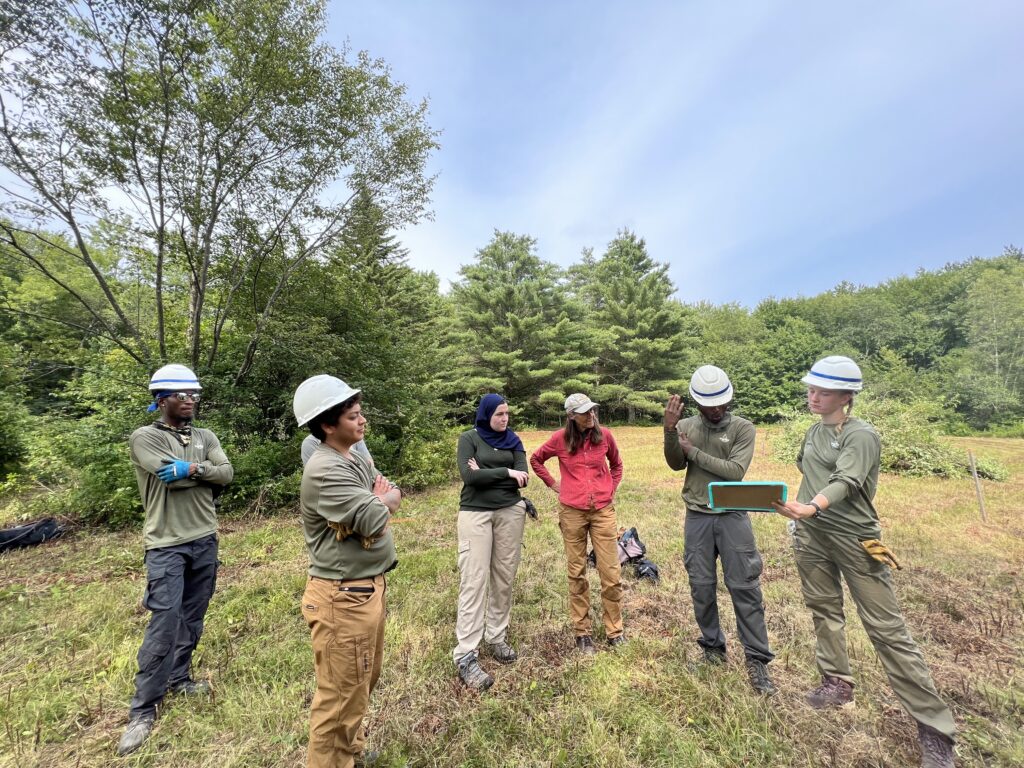
When most people picture “the outdoorsy type,” the image that flashes across their mind usually doesn’t include a disabled person. This is unsurprising. For too long, our outdoor myths have been told through tales of conquest: summiting peaks, suffering through harsh weather, pushing the body beyond limits. Rarely do those stories make room for disabled adventurers who find strength and connection in ways that don’t fit the old mold. I’m a late-diagnosed neurodivergent person. I only discovered my Autism and ADHD in the past few years, as I was already well into my adulthood. Up until that point, I’d constantly struggled with things that came naturally to others, but I could never make sense of why that was. So I chalked it up to just being uniquely ill-equipped at navigating the world for seemingly no reason at all. For me, the outdoors has been a refuge, teacher, and connection-maker. Walking in brisk air steadies my mind and disentangles my thoughts. Backpacking trips and climbing routes bring focus and confidence. Through outdoor work, I’ve forged community, lifelong friends, and a career. Making the outdoors more inclusive isn’t a side project for me. It’s my livelihood and I view it as a collective responsibility. Doing so ensures that anyone of any ability can access the physical, mental, and spiritual renewal that nature freely offers.
In October, Americans observe both Disability History and Awareness Month and National Disability Employment Awareness Month by paying tribute to the accomplishments of disabled people. This month — and every month — I’ll keep advocating, collaborating, and storytelling until accessibility isn’t a bonus feature, but a norm. Because the more of us who find our way outside, the more complete the story of the outdoors becomes.Here’s the facts of the matter: We’ve always been out here. According to the CDC, more than one in four Americans lives with a disability. And as the Outdoor Industry Association reports, over half of the U.S. population participates in outdoor recreation. So the question isn’t whether disabled people are outdoors. It’s whether the outdoor industry and its storytellers are paying attention. That’s why this October, I’m shining a light on how the disability community is transforming access to recreation, reimagining outdoor careers, and reclaiming our place in the narrative.
Recreation: Building Access One Trail at a Time
One keystone resource for accessible joy is the Access Pass, providing lifetime, no-cost entry into more than 2,000 federally managed recreation sites. It’s a golden ticket for disabled American citizens and residents, unlocking everything from National Parks and Historic Monuments to lakeshores and battlefields. The Access Pass encapsulates an expansive definition of “disability.” It includes physical, sensory, cognitive, and mental health alike. I’ve seen firsthand how this inclusivity opens doors for countless outdoor enthusiasts who once felt shut out. Learn more about the pass here.
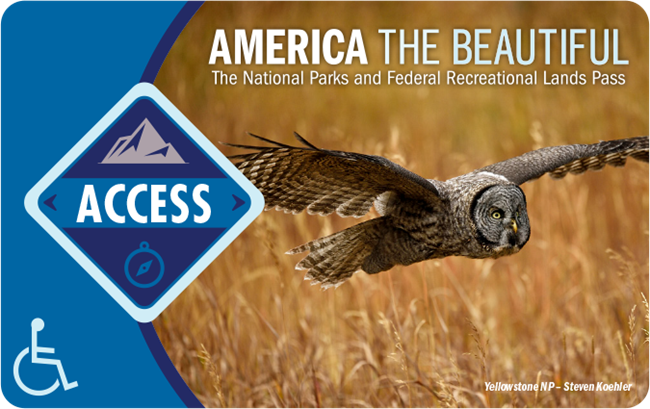
The America the Beautiful-The National Parks and Federal Recreational Lands Access Pass, which empowers disabled recreationalists no-cost, lifetime entry to thousands of public lands sites across the U.S.
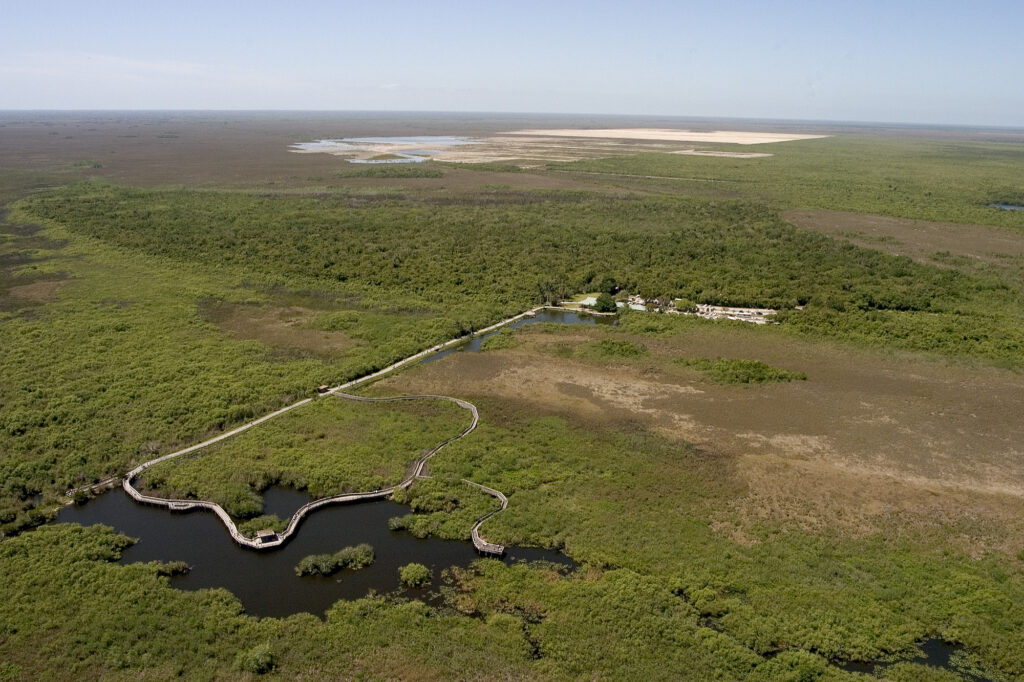
Many state and national parks now feature tactile trails, braille maps, captioned exhibits, and adaptive equipment like hand cycles and beach wheelchairs. Here in the South, Georgia’s Anna Ruby Falls and Fowler Park both feature braille trails with guide rails and interpretive signs, while Florida’s Everglades National Park offers the Anhinga Trail and Shark Valley Tram Road, which both invite wheelchair users into the Park’s heart. And beyond public lands, nonprofits like Waypoint Adventure, Catalyst Sports, and Camp Abilities North Georgia are proving that “adventure” is for everybody and every body. A Southern accessible leader I particularly admire is Keely Zeitlin, who works with blind and low-vision communities. Through braille instruction and adaptive recreation, she helps people navigate nature safely and joyfully. Her work with Camp Abilities North Georgia reminds me that accessibility and inclusion aren’t charity. Instead, they’re empowerment.
Professional: Constructing Career Corridors With CorpsTHAT
For me, outdoor accessibility isn’t just about recreation. It’s also about building pathways so disabled nature-lovers can work in the industry. I recently connected with CorpsTHAT, a Deaf-centered nonprofit bridging the gap between disability and environmental careers. Its programs range from short-term stewardship projects to full-time internships, and offer Deaf, hard-of-hearing, DeafBlind, DeafDisabled, and late deafened participants real-world conservation experience in an environment that centers disability. From conservation crews comprised fully of Deaf leaders and members to certifications taught in American Sign Language (ASL) to training for non-Deaf allies, their programming takes a holistic approach to building bridges for budding Deaf outdoor professionals. What struck me most is how CorpsTHAT builds both community and confidence in tandem. One alum, Jemima Chong, explained: “This program gave me grounding, enriching, and life-changing experiences through challenges and growth.” Michael “Ike” Paige, another alum, shared: “[In the] end, we become like brother and sister. Our bond is very unbreakable and unforget[able].” Their stories remind us that outdoor leadership comes in many languages, and ASL is one of them.
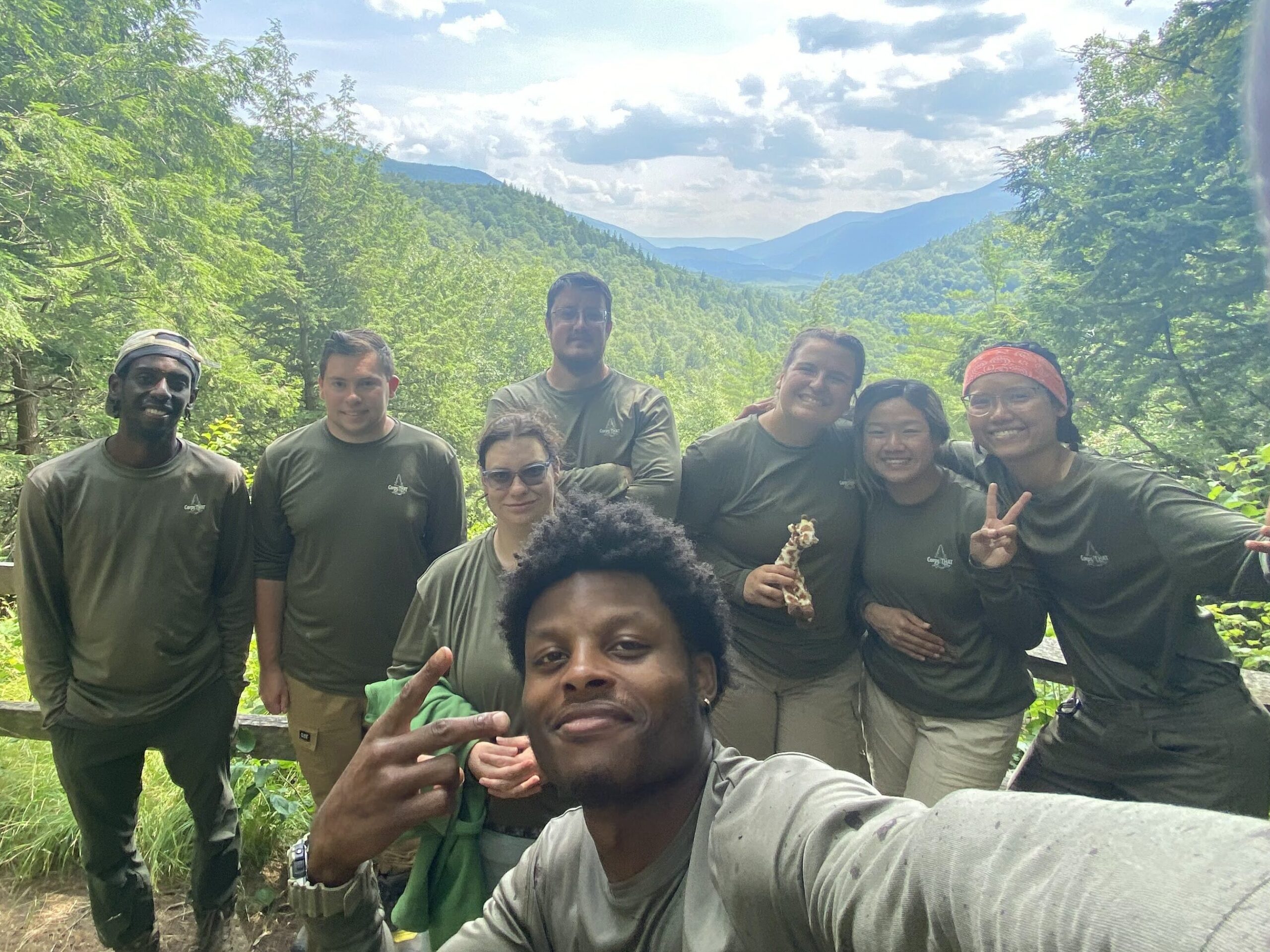

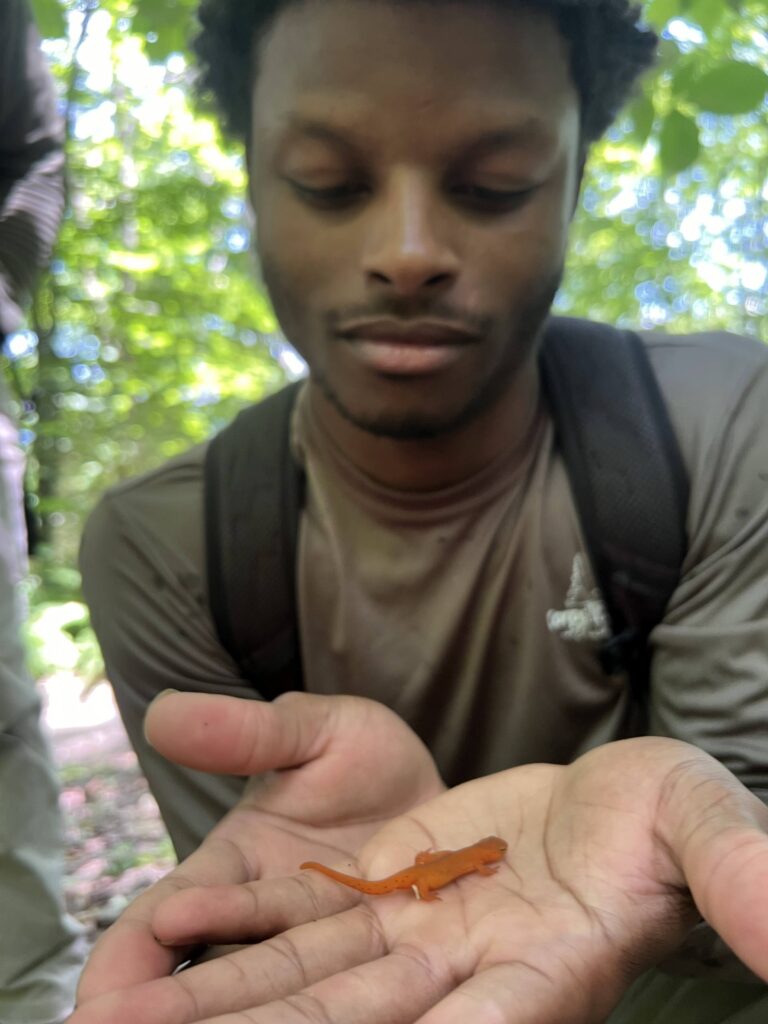
Individual CorpsTHAT crew members interacting with wildlife. Photo courtesy of CorpsTHAT.
Storytelling: Changing the Narrative One Word at a Time
Access is physical, linguistic, and cultural. The stories we tell shape who feels welcome in the wild. That’s why, at Color My Outdoors, we’ve begun adding image descriptions and alt text to our social media posts. These small steps help make our digital storytelling accessible to blind and low-vision readers who use screen readers. We also work to strip jargon, explain acronyms, and use plain language. Because when we write clearly, more people can enjoy the story, and see themselves in it. And that’s how belonging begins.
Resources Worth Exploring
For folks who are curious about the intersection of disability and the outdoors, figuring out where to start can feel intimidating at first. In addition to the links we’ve provided in this article, below are more links to help kick off your learning journey:
- Disability Generally
- Disability in Outdoors and Recreation

